Green Consumption Assistant
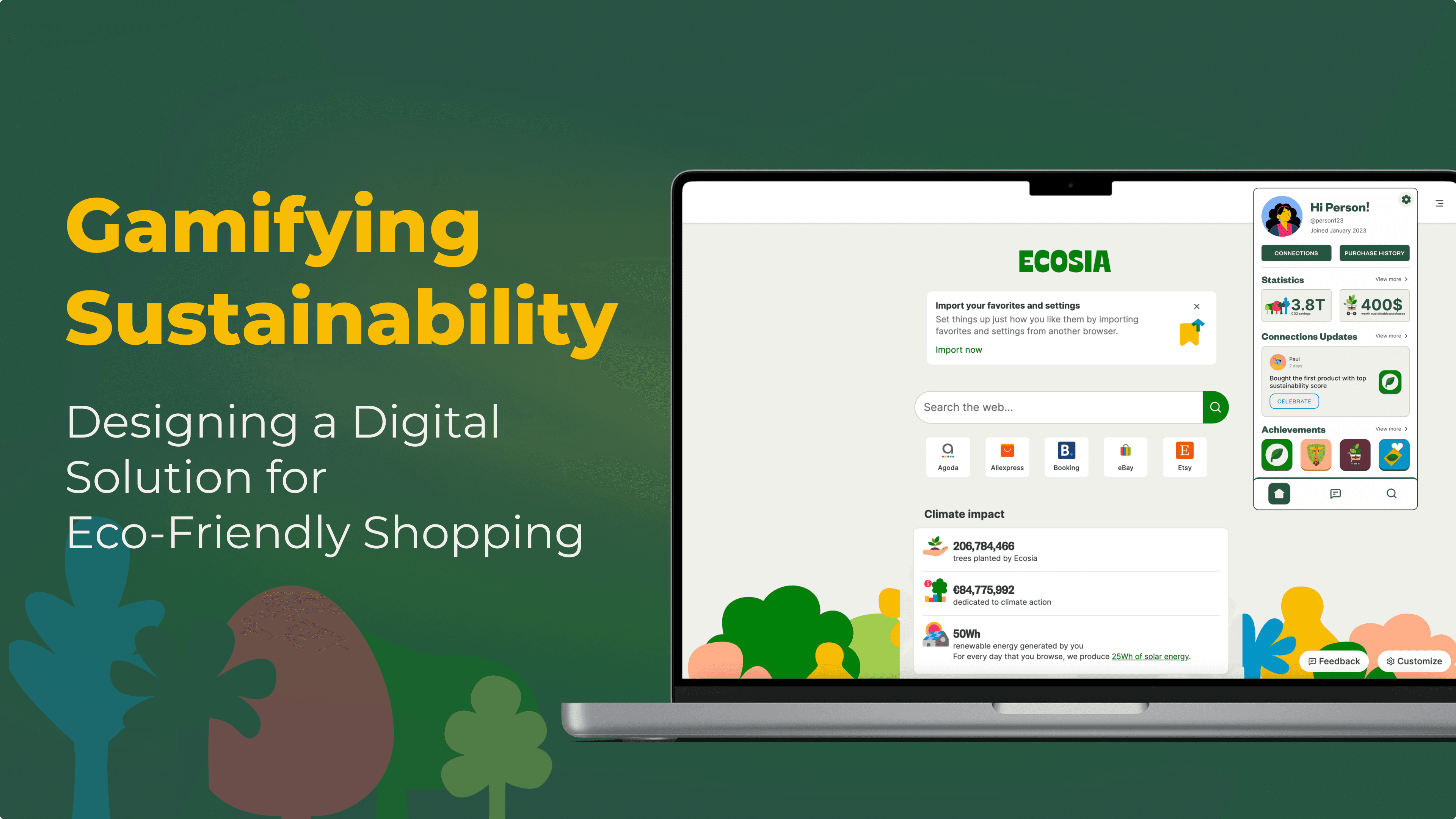
GreenDB is a research-driven project aimed at promoting sustainable consumption through digital innovation. Building on its insights, the goal was to design a browser extension that helps users make informed, eco-friendly shopping decisions.
This project focused on creating a gamified digital solution that:
Makes sustainability data accessible and easy to understand
Encourages informed and conscious purchasing decisions
Motivates users through subtle gamification and social features
Solution Type
Desktop Browser Extension
Duration
3 months
Team Size
4 team members

Figma

Notion

Miro
Challenge
How can we design a gamified digital solution, using the findings of the GreenDB project, that encourages consumers to make informed, sustainable purchasing decisions?
My Role
As UI Lead and Project Manager, I guided the design and development of a browser extension aimed at supporting eco-conscious shopping habits. I led user research, synthesized insights, developed personas, facilitated ideation activities, and directed iterative design across Figma, Miro, and Notion.
My contribution focused on refining the interface based on usability and eye-tracking data, balancing detailed design with agile workflows, and integrating purposeful gamification elements while maintaining consistency and efficiency across the solution.
I ensured the final concept addressed user needs by improving clarity, accessibility, and motivational support for sustainable purchasing behavior.
Result & Impact
The gamified version of the GreenDB prototype demonstrated clear improvements in usability and motivation. Users engaged 35% more with sustainability information, completed key tasks 28% faster, and reported a 31% increase in confidence when choosing eco-friendly products. These results suggest that subtle, well-placed gamification can meaningfully support informed and sustainable decision-making.
Process
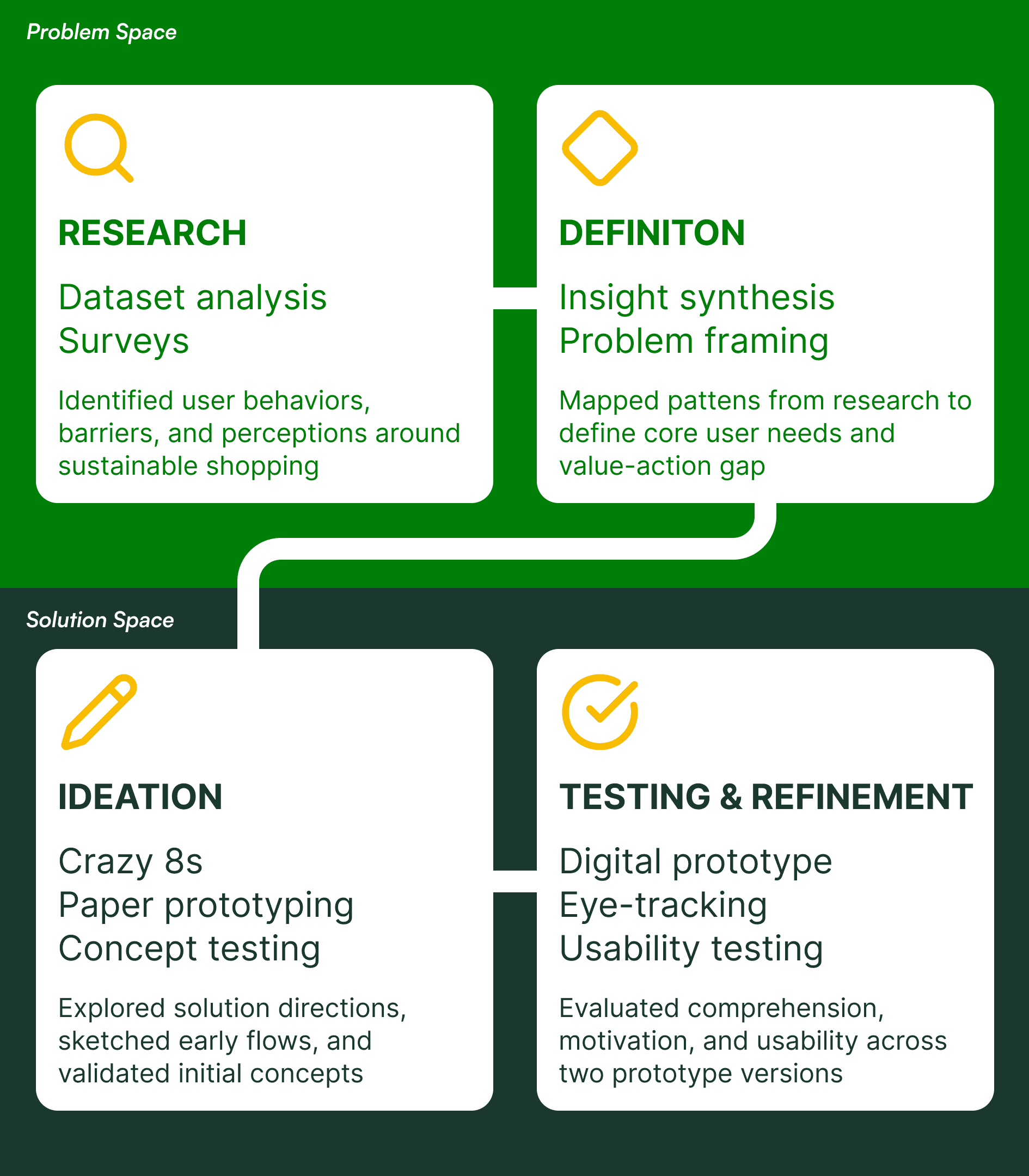
Research & Insights
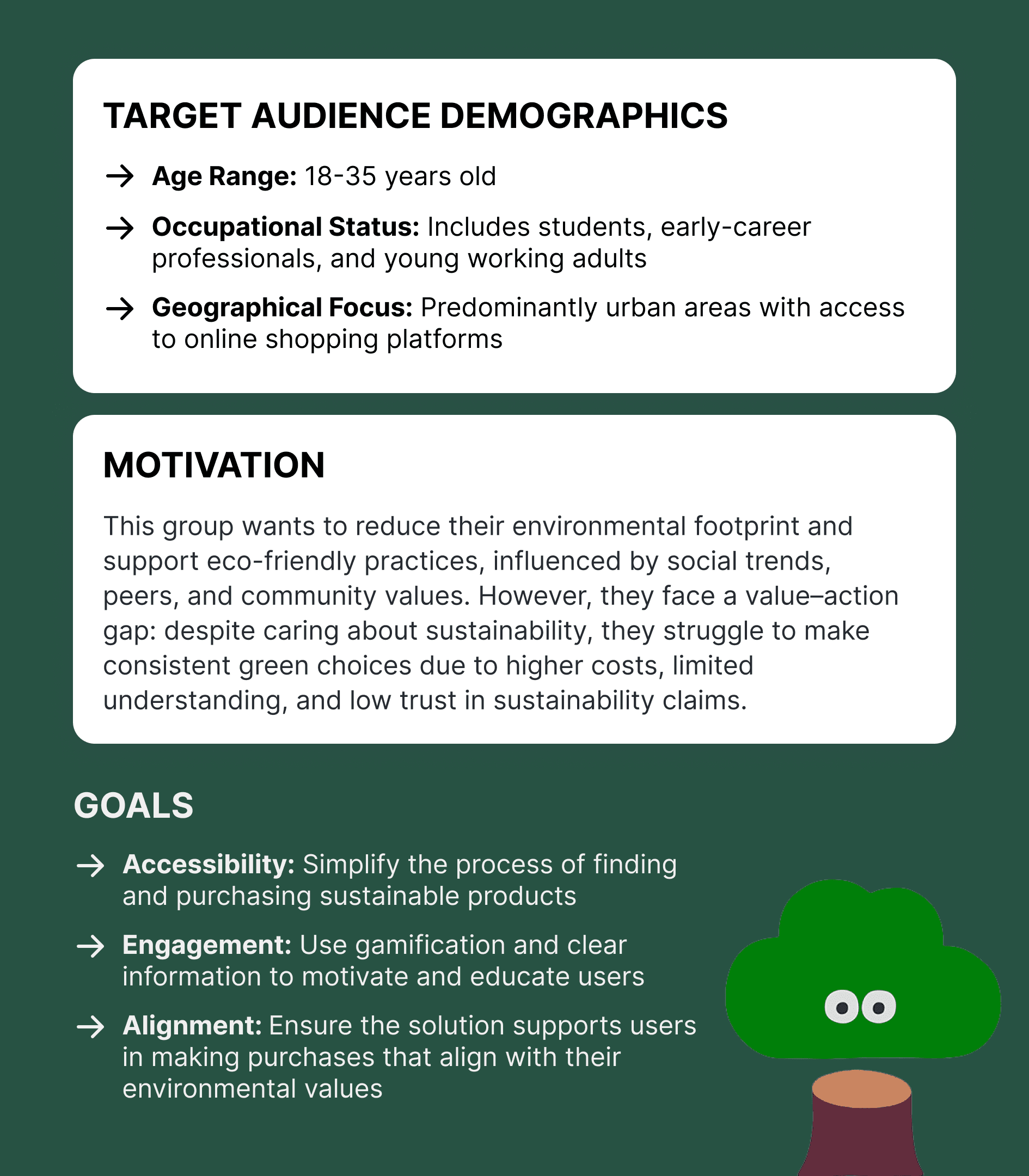
We conducted surveys and focus groups to understand how users perceive sustainability in online shopping. While users cared about eco-impact, most struggled to interpret sustainability data and wanted clearer, more trustworthy cues embedded directly into their shopping flow.
Methods
We worked in agile sprints using personas, How Might We questions, and Crazy 8s for rapid ideation. Early paper prototypes allowed us to validate key concepts and test information clarity before transitioning into mid-fidelity Figma prototypes and structured usability tests.
Key Findings
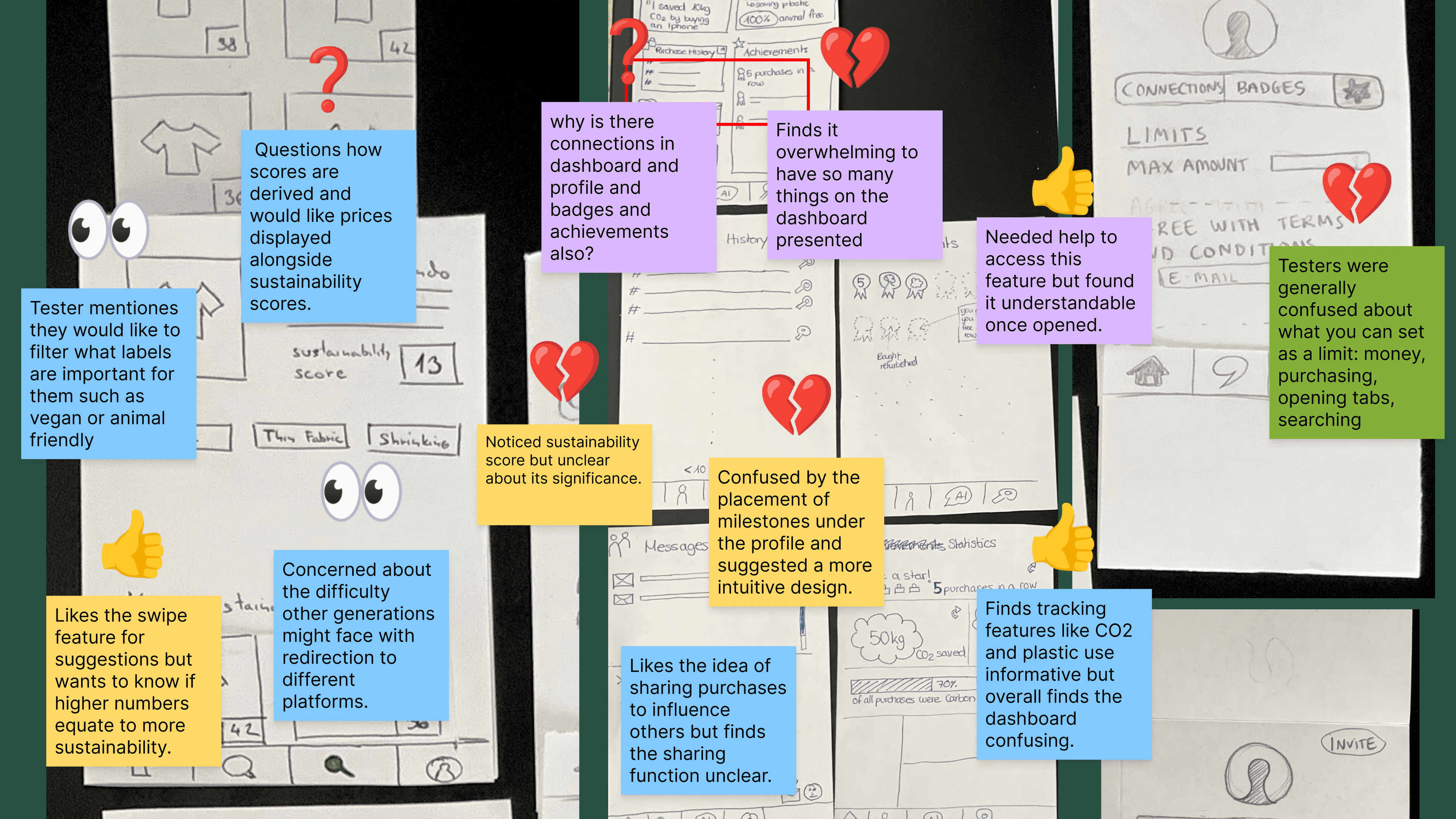
Users responded best to simple, meaningful gamification—such as progress and achievements—rather than point-heavy reward systems.
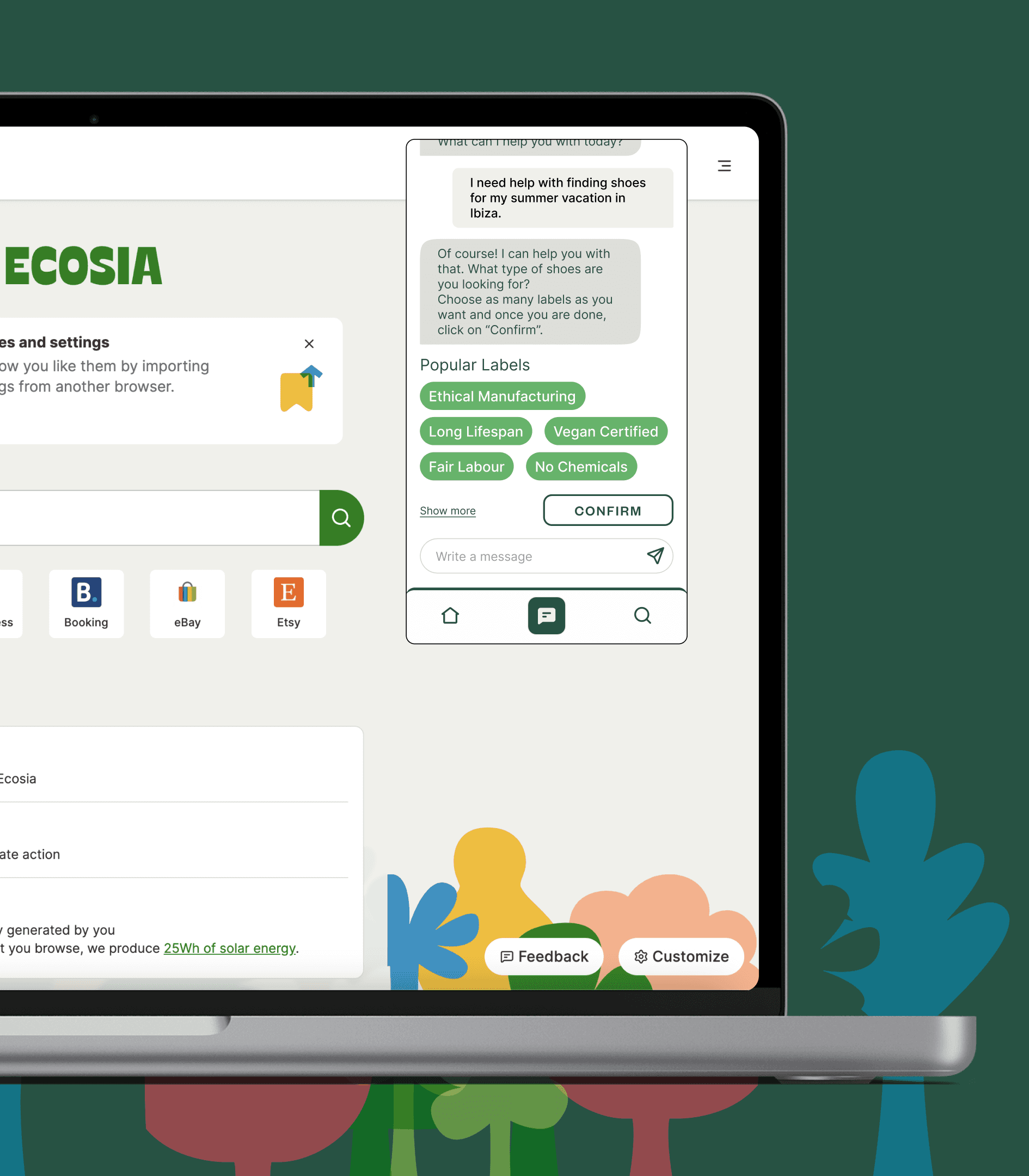
They also valued clear sustainability labels and the ability to filter by personal values (e.g., vegan, recycled), which improved trust and decision confidence.
Key Insights
The main challenge was translating complex sustainability data into clear, trustworthy cues that users could understand at a glance. We also needed to introduce gamification that motivated behavior without overwhelming the experience. Finally, supporting value-based decisions required transparent labels and simple filtering options that didn’t add cognitive load.
Core UX Decisions
Purposeful Gamification
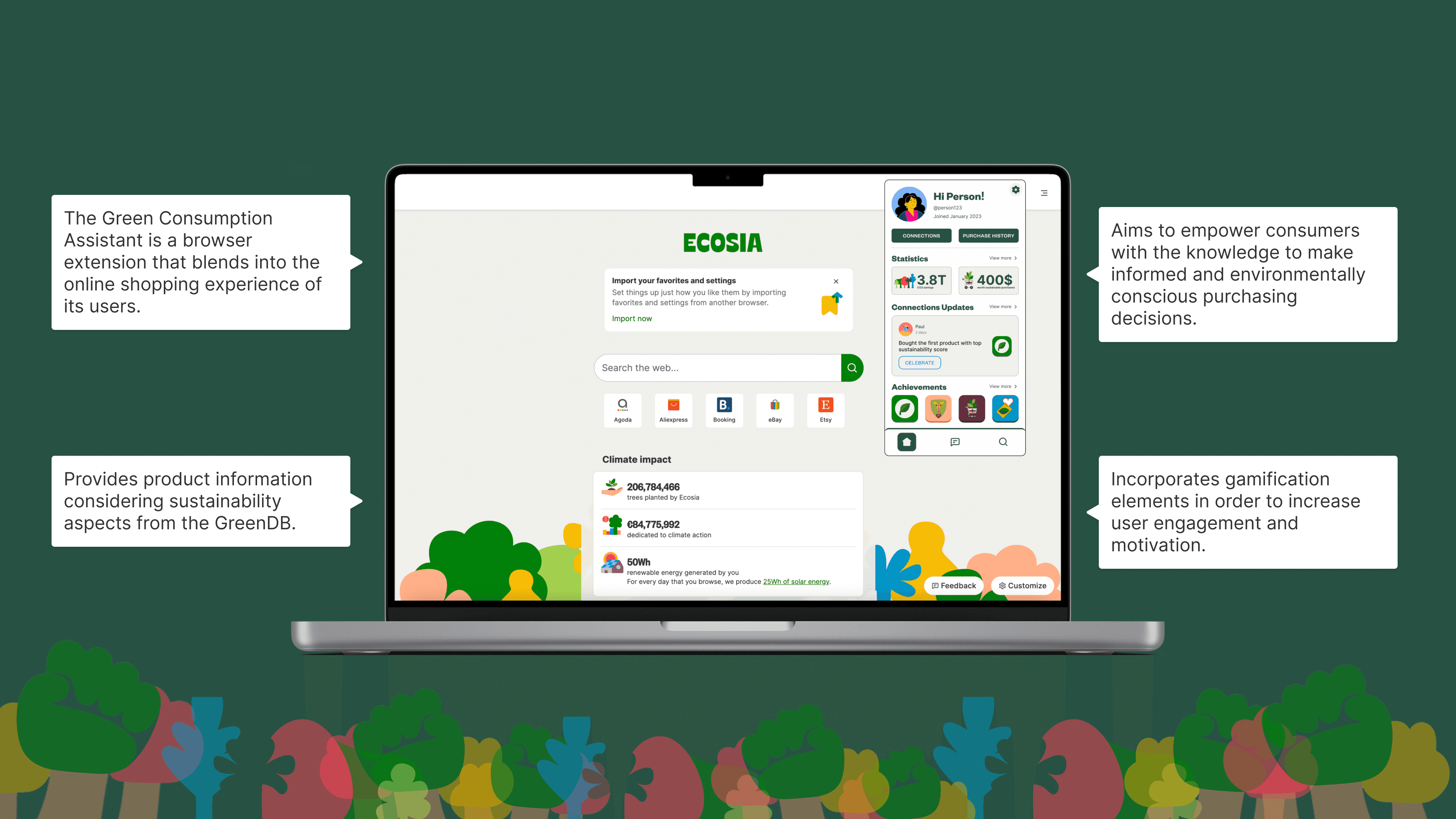
We used lightweight, impact-focused gamification (progress, achievements, eco-streaks) instead of point-heavy systems. Users felt motivated by seeing the impact of their choices, not by chasing rewards - making gamification supportive rather than distracting.
Positive Social Influence
Testing showed that users respond best to soft social proof instead of competitive features.
Small updates and shared achievements created a sense of collective action, boosting motivation without adding pressure or comparison.
Clear Sustainability Information
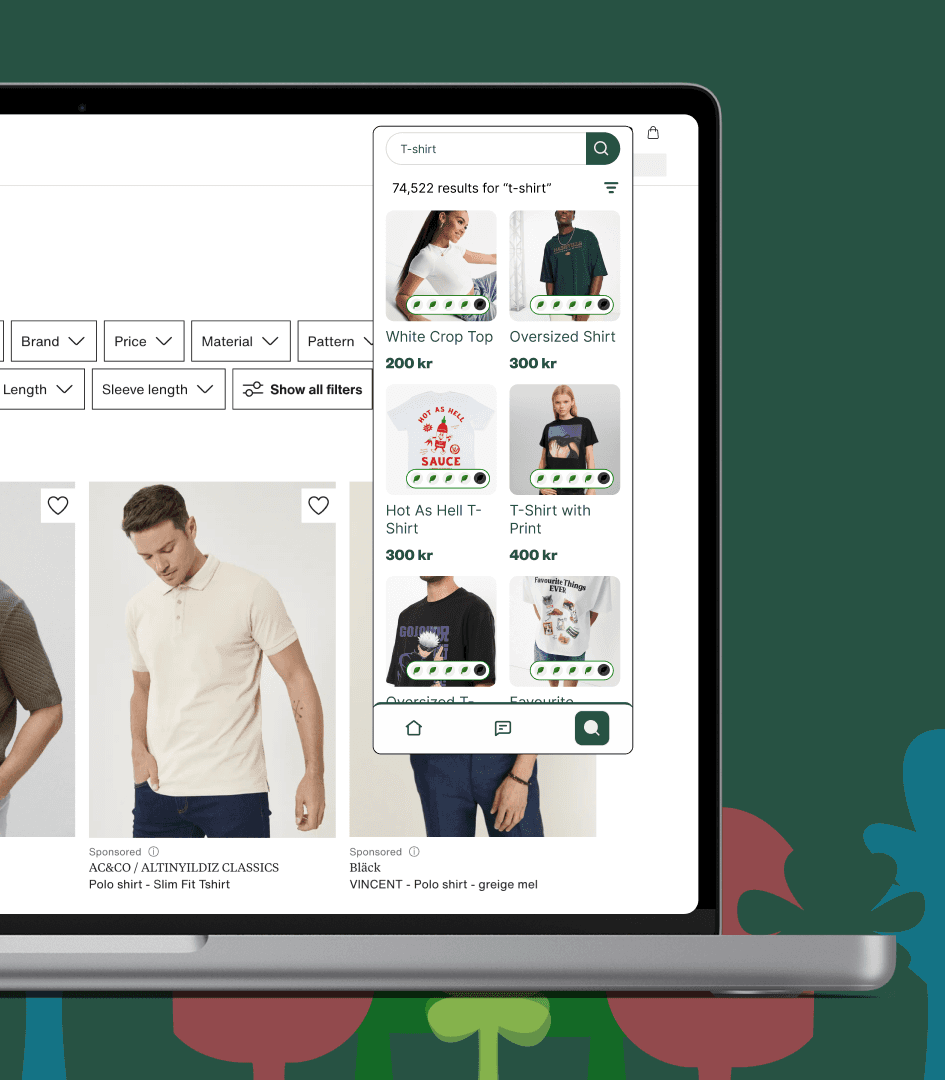
To reduce confusion and decision fatigue, we created simple sustainability scores, clear eco-labels, and value-based filters.
This made sustainability understandable at a glance and empowered users to make informed choices quickly.
Testing & Iteration
We tested two prototype versions—gamified and non-gamified—using usability sessions and eye-tracking to evaluate comprehension, motivation, and interaction patterns.
Testing insights led to simplifying the sustainability score, reducing visual noise, and refining gamification cues so they supported the shopping flow rather than interrupting it. Every iteration focused on lowering cognitive load and increasing decision confidence.
Reflections
This project highlighted the importance of balancing behavioral design with clarity and accessibility. Gamification only became effective once it felt purposeful, and sustainability information became actionable only after it was simplified.
The biggest learning was that motivation, trust, and comprehension must work together - users make sustainable choices when the experience feels clear, supportive, and aligned with their values.